
Triad Black History Unlocked: Reclaiming Our Traditions

In 1830, North Carolina passed laws which made it illegal to teach Black people to learn how to read and write—largely because of the abolitionist writings encouraging the slaves to revolt against their masters and slaves forging legal paper that said they were free. After the Civil War ended in 1863 and slavery was completely abolished in the United States by 1865, North Carolina’s 1830 law that made it illegal to teach Black people to read and write was repealed.
In 1867, Lewis Hege, Alexander Volger (Gates), and Robert Waugh, African American lay leaders in the African Moravian Church in Salem, led the effort to build the first school for African Americans in what is now Winston-Salem. The land was provided by the Home Moravian Church and funding was provided by the Quakers in Greensboro. The first Colored School was built in 1867. According to the People’s Press newspaper, the school was “pleasantly situated in a grove.” It was a small white building with plank siding, louver shutters and a bell tower. This school filled an educational void for newly freed slaves. At the time of the building of the school, only 133 of the 116,000 students in North Carolina were Black. This action changed the trajectory of schools across the state, forever.
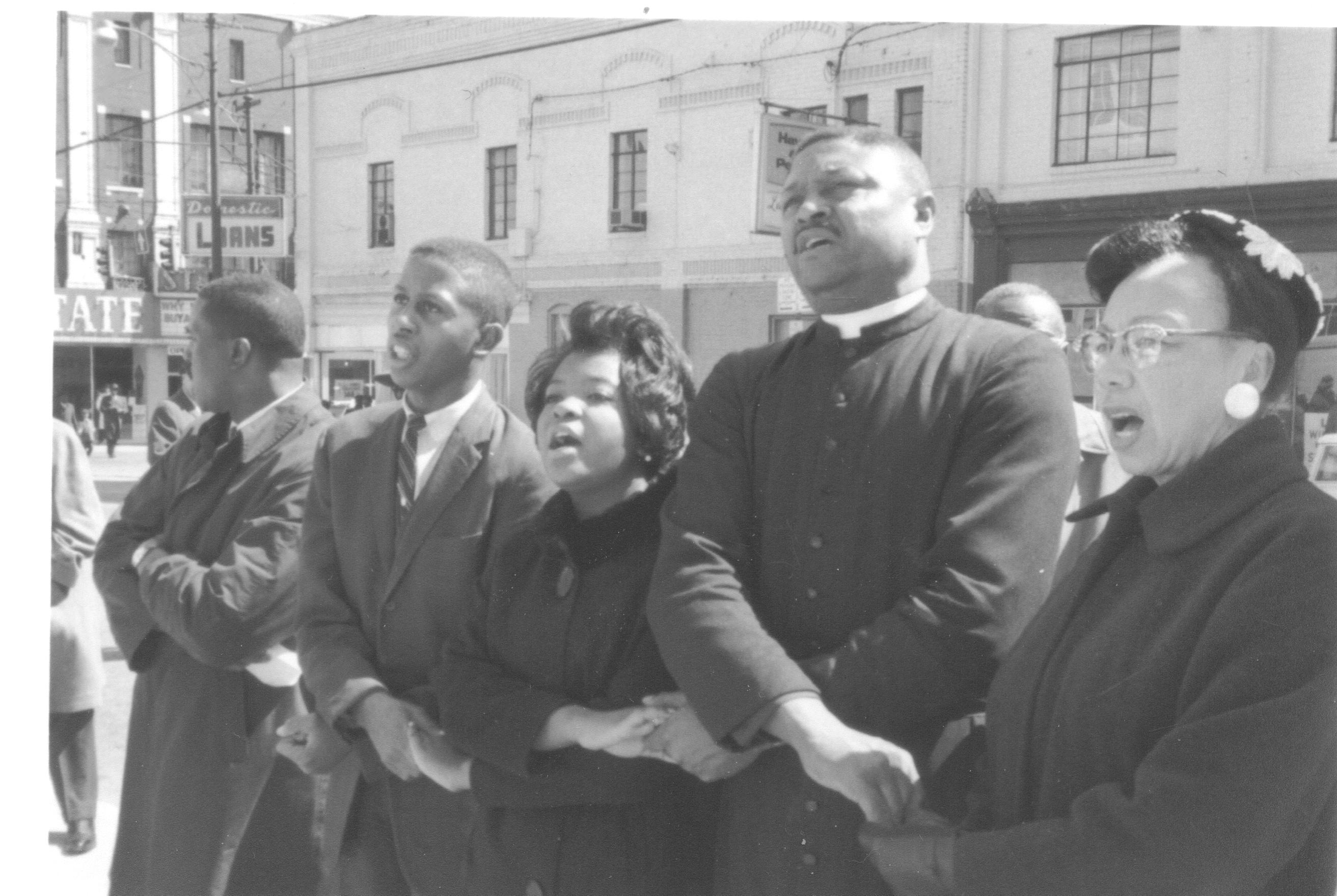
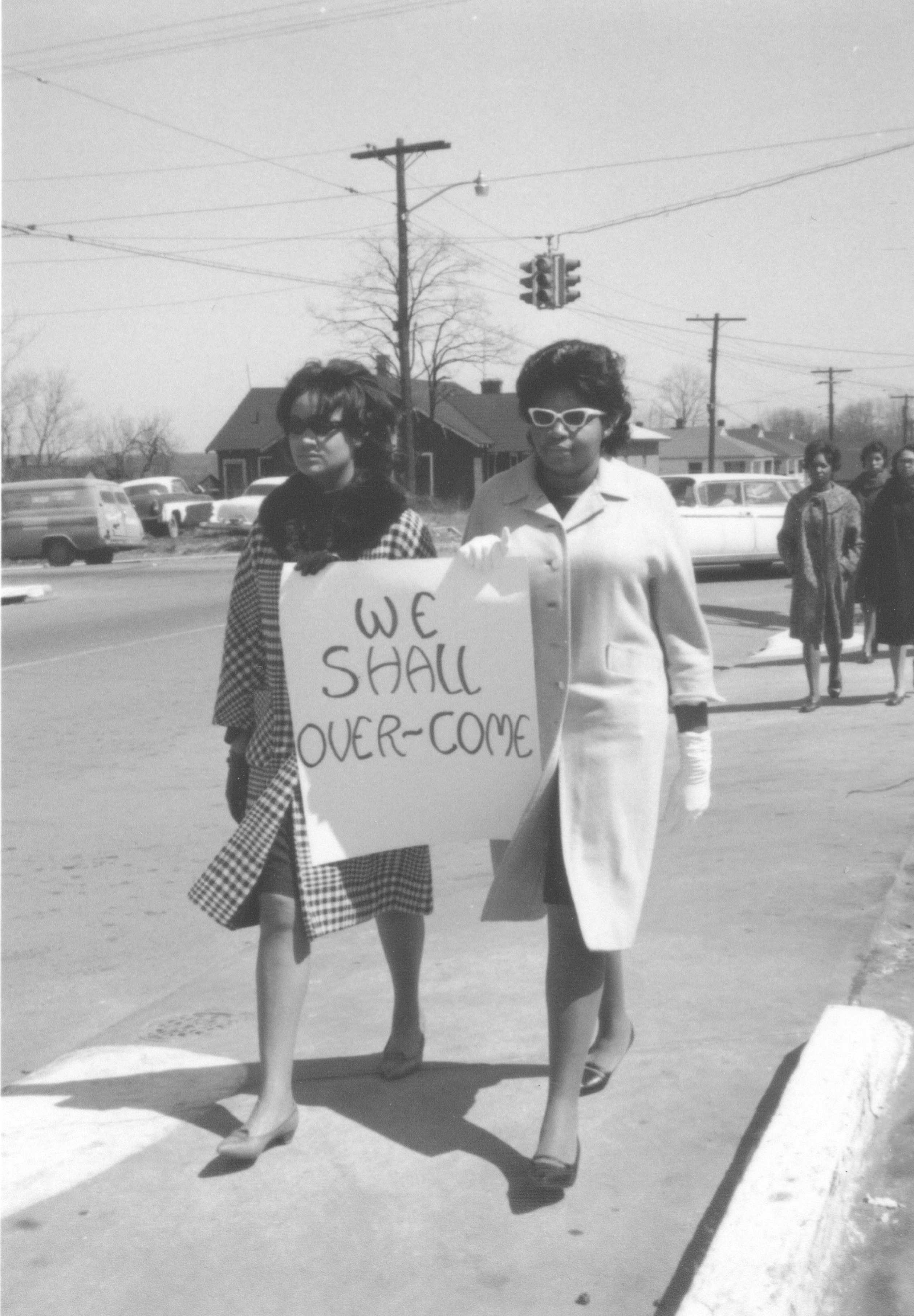
During the Civil Rights Movement students from Winston-Salem State College (named Winston-Salem State University in 1969) were active in protests sparked by national and local events. On Sunday, March 21, students from Winston-Salem State College participated in a sympathy march as a salute to the marchers in Selma, Alabama, who began a 54-mile, 5 day walk to Montgomery, Alabama on the same day. In Montgomery, local citizens, the Student Nonviolent Coordinating Committee (SNCC), and the Southern Christian Leadership Conference (SCLC) had been campaigning for voting rights. Pictured are students marching from the campus to the Post Office on West Fifth Street in downtown Winston-Salem. When the students arrived they united in prayer and song in 1965 (Courtesy FCPL.)
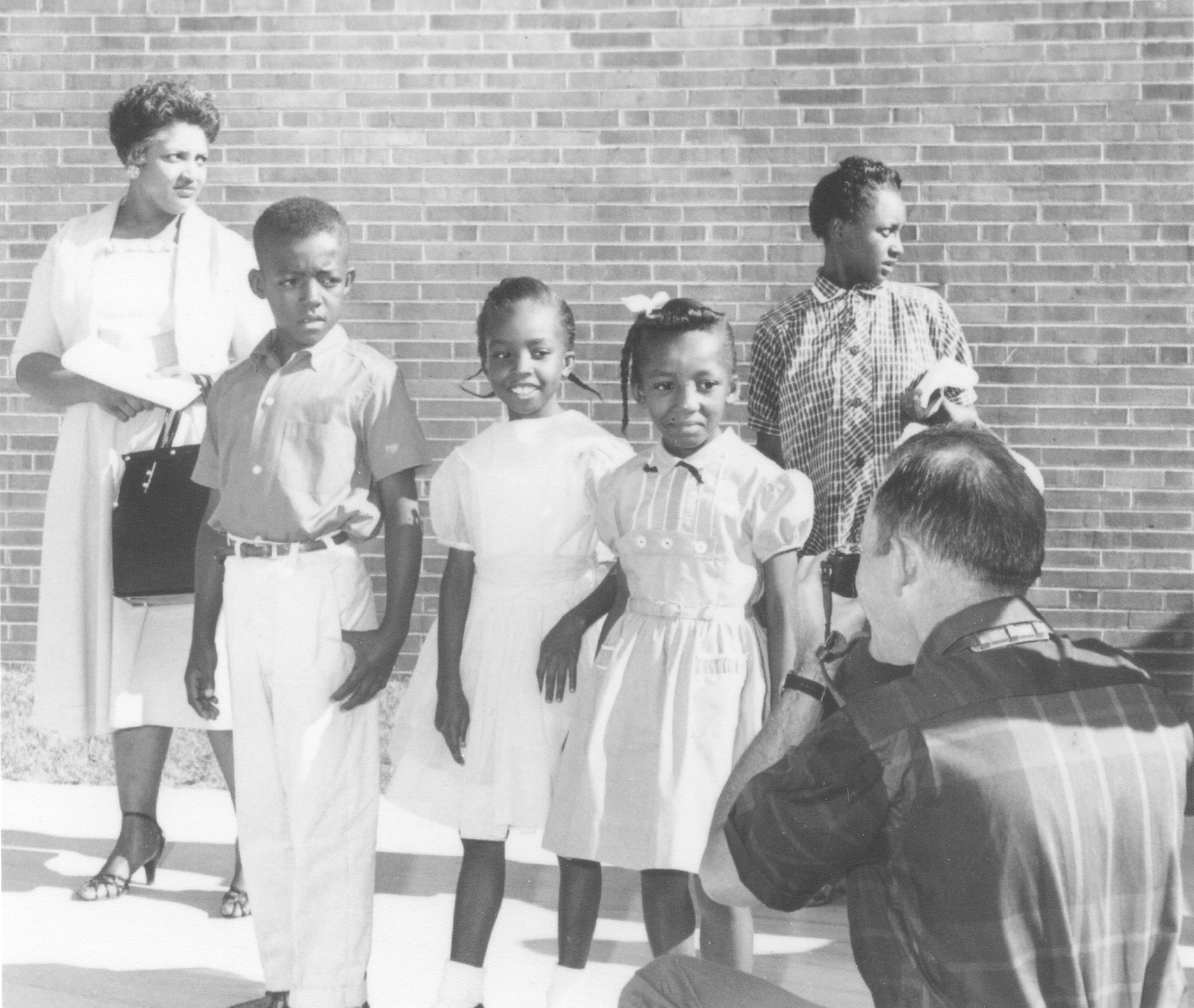
Norma Corley and Roslyn and Kenneth Cooper were the first Black children in Winston-Salem to integrate an elementary school in Winston-Salem. More than half of Easton’s 600 existing students stayed at home that first day. Pictured are: Mrs. Lovie Cooper, Kenneth Richard Cooper, Norma Ernestine Corley, Roslyn Dianne Cooper, and Mrs. Ernest Corley. Frank Jones is in the foreground at the integration at Easton Elementary School in 1958 (Courtesy FCPL). Today, nearly 30% of the WSFCS school system population is Black students and 29% are Hispanic.
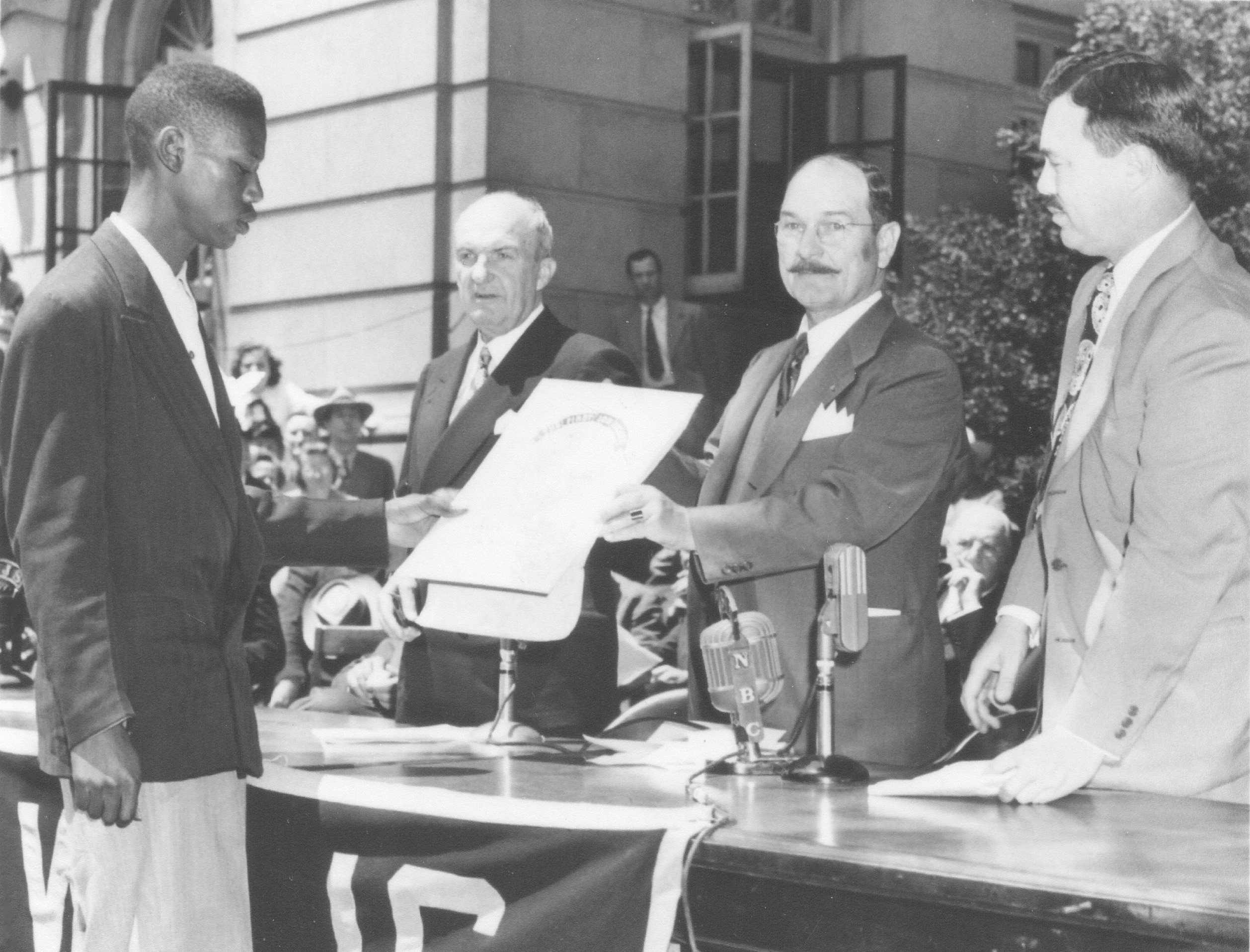
Called the city of the arts, Winston-Salem’s craftsmanship and artistry dates back to the skilled Moravian artisans of the 18th century. The Winston-Salem/Forsyth County schools also provided an avenue for creative expression among its students. An African American student from Carver High school would design the new seal for Forsyth County. Willie H. Johnson Jr.’s design won the contest for the design in 1949. The design was placed in the time capsule that was buried on the lawn of the courthouse in 1949. The capsule was removed in 1958 due to courthouse expansion. Here, he is presented a copy of the resolution proclaiming a new seal for Forsyth County. Other men are: James G. Hanes, ?, and William B. Simpson. (Courtesy FCPL )
CTA: For more Black history, happening and culture, please visit our website triadculturalarts.org and follow us on social media @triadculture. Source: Winston-Salem’s African American Legacy by Cheryl Harry, 2013CTA: For more Black history, happening and culture, please visit our website triadculturalarts.org and follow us on social media @triadculture. Source: Winston-Salem’s African American Legacy by Cheryl Harry, 2013