
Advocating Access in Academia: Salem College’s Stand for Inclusion
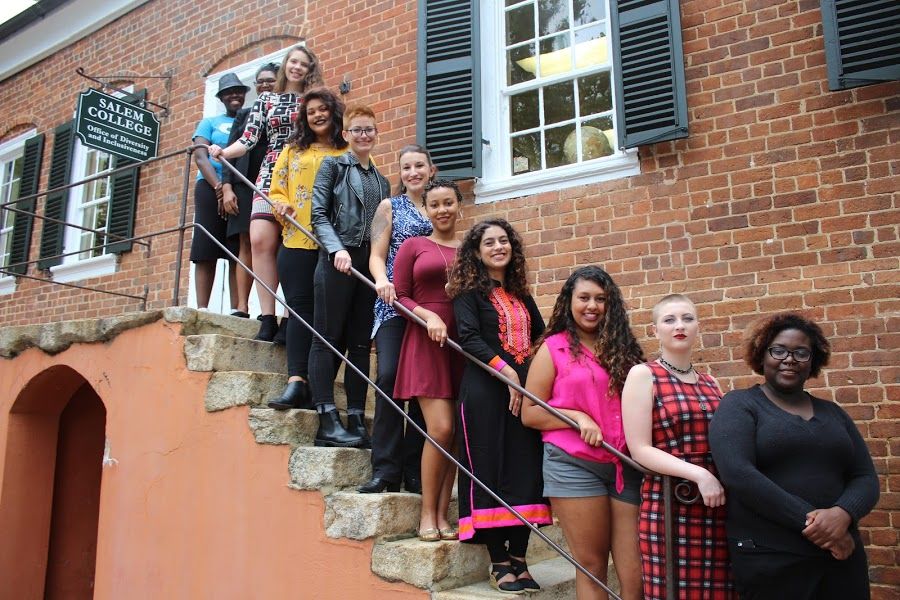
Given the history of Salem Academy and College, it should be no surprise that a commitment to equity, diversity, and inclusion is at the institution’s core. Founded in 1772 by a group of Moravians who believed that girls deserved access to learning, Salem is the oldest continuously operating educational institution for women and girls in America.
At the time of its founding, this belief in spiritual equality extended not just to white girls and women, but to enslaved Black girls as well. During the 18th century, both Black and white students were enrolled at the school. One of these students, Anna Maria Samuel, attended the girls’ school in the girls’ school in Salem from 1793 to 1795, and is recognized today through the naming of The Anna Maria Samuel Project: Race, Remembrance, and Reconciliation.
Salem’s racial history, like many educational institutions, is not all positive, however. By the nineteenth century, Moravian attitudes about race shifted, and while Salem continued to educate young white and Cherokee girls, Black students were no longer welcome to attend. Additionally, during this time period, at least 17 enslaved people labored at Salem — these individuals were rented or owned outright by the institution. It was not until the early 1970s that the first African American students graduated from the Academy and the College in the modern era.
Today, Salem intentionally celebrates the rich diversity of its student body, of which approximately 50% identify as students of color. The College also boasts high numbers of first generation college students, and significant socioeconomic diversity within its classes. In 2022, as part of the institution’s strategic plan, Salem hired its first Vice President for Equity, Diversity, and Inclusion and founded the Office of Equity, Diversity, and Inclusion.
The Office of Equity, Diversity, and Inclusion fosters a thriving and inclusive environment at Salem Academy and College through community building and engagement, education and programming, and the intentional design of equitable policies and practices. Dr. AJ Mazaris (they/them), Vice President for Equity, Diversity, and Inclusion, believes that institutions function best when equity, diversity, and inclusion goals are built into their mission and strategic goals. “At Salem, we are focused on developing the next generation of leaders who will make the world a better, healthier, and more equitable place. To live up to that mission, we need to be graduating diverse classes of learners who have the capacity to communicate across differences, understand multiple perspectives, and identify the root causes of health disparities. This is precisely the work that the Office of Equity, Diversity, and Inclusion supports.”
Program Manager for Equity, Diversity, and Inclusion, Julia Meyarzum (she/her), concurs.
“I believe in the legitimate power of community,” Meyarzum shares. “We are helping shape leaders who will be guiding communities with inclusion and belonging in mind, which will lead us to an equitable world for all.”

This year the Office of Equity, Diversity, and Inclusion has launched a number of successful community engagement initiatives that have supported these goals, including hosting a visit with Pulitzer-Prize winning author Dr. Marcia Chatelain during Black History Month, providing educational workshops for students, faculty, and staff, and creating the OEDI community lounge, a space for students, faculty, and staff to gather. Additionally, the Office held a Celebration of Diverse Graduates, which honored Black, Latinx, LGBTQ+, and first generation students.
What’s next? Look for more opportunities for education and community building in the year ahead, as well as an EDI Toolbox that departments and units can customize to their specific needs. “For me,” Mazaris says, “success looks like taking the core values of our founders – the idea that everyone is worthy of and capable of higher learning – and translating that into an institution that will nurture and celebrate diversity for another 250 years!”